
Common misconception first: privacy in a wallet is a single switch you flip — enable “private mode” and you’re anonymous. That’s wrong. Privacy is a stack of mechanisms (key control, transaction construction, network routing, and metadata minimization) each with its own failure modes. For a privacy‑minded user in the US deciding among wallets that hold Bitcoin, Monero and other coins, understanding that stack is the single best mental model to avoid surprises.
This article walks through how those mechanisms work in practice, using a multi‑currency privacy wallet as the example case. I focus on three realities: what the software can control directly (key management and transaction construction), what it can help you manage (network anonymity and node selection), and what is fundamentally a user or ecosystem limitation (blockchain fingerprinting, regulatory pressures, and migration incompatibilities).
How privacy is built: the five-layer stack
Think of wallet privacy as five layers. Each layer reduces a different form of exposure; failure in a single layer can create identifiable leaks even when other layers are strong.
1) Key custody and software openness. Non‑custodial control — where private keys never leave the device — is the foundation. Open‑source clients allow independent inspection of code to verify this behavior. When a wallet keeps keys locally and open‑source code confirms that, you reduce the risk of backend exfiltration or hidden telemetry.
2) Device and local protection. Device‑level encryption (Secure Enclave on iOS, TPM on many Android devices) and local access controls (PINs, biometrics) protect keys if the device is lost. This is not absolute: a compromised OS or a coerced user can still yield keys. Device security raises the bar but is not the last line of defense.
3) Transaction construction tools. For Bitcoin, privacy depends heavily on how transactions are built: coin selection, UTXO control, PayJoin (P2EP) and batching affect linkability. For privacy‑focused users, wallets that expose coin control, support PayJoin v2, Silent Payments and batching increase plausible deniability and reduce on‑chain clustering. Monero uses ring signatures, stealth addresses and confidential amounts by design, but wallet features like background synchronization and subaddresses influence how often you reuse addresses and thus your exposure.
4) Network anonymity. Even perfectly private transactions can be correlated to IP addresses if the wallet leaks network metadata. A Tor‑only mode, I2P proxy support, and the ability to run or connect to custom user‑selected nodes materially reduce network‑level deanonymization risks. This matters more in jurisdictions or threat models where adversaries can monitor ISP traffic.
5) Cross‑chain and exchange interactions. Built‑in swap functions and routing (for example, systems that automate decentralized routing between market makers) simplify moving assets but can introduce linking if routing parties log trades or require KYC. Decentralized routing systems that avoid a single central intermediary reduce this risk, but they are not a perfect shield from economic analysis that attempts to re‑link flows.
Mechanisms in practice: a closer look at BTC, XMR and other chains
Bitcoin: privacy is optional and fragile. Tools like specific UTXO coin control, PayJoin v2, and Silent Payments reduce linkage, but they depend on counterparties and wallet UX. PayJoin requires a cooperating counterparty; Silent Payments rely on complementary infrastructure. Even with these tools, chain analysis firms can find patterns — especially when exchanges consolidate outputs or when coin control is abused. Transaction batching reduces fee and privacy costs but can aggregate otherwise separate payments.
Monero: privacy by default, but not infallible. Monero provides ring signatures, stealth addresses, and confidential amounts. Wallets that keep the private view key on the device and support subaddresses strengthen those protections by maintaining unique recipient routes and limiting external visibility. Background synchronization improves usability without exposing keys. But Monero privacy still depends on network routing choices (IP leaks can undermine plausible deniability) and on correct wallet hygiene: address reuse, linking receipts, or using custodial services can degrade privacy.
Other coins: some chains add privacy layers (Litecoin’s MWEB) or require mandatory shielding (Zcash enforced by some clients). Each feature has trade‑offs — optional layers require explicit activation and can be less widely accepted by counterparties; mandatory shielding protects against transparent address leaks but may complicate interoperability with services that don’t support shielded flows. The practical effect: you must balance how often you need a private transaction against whether counterparties accept that format.
Trade‑offs and limits: what wallets can’t solve
No software wallet can eliminate every privacy risk. There are several persistent limits. First, human behavior: reusing addresses, broadcasting on clearnet when using custodial services, or combining private and public funds in observable ways will create linkability. Second, external actors: exchanges and large liquidity providers may require KYC, which can re‑link a previously anonymous on‑chain identity to a real person. Third, protocol limits: coins like Bitcoin are transparent by design, so privacy depends on clever transaction constructions that are imperfect and sometimes optional.
Technical trade‑offs matter too. Hardware wallet integration (Ledger, air‑gapped devices) improves key security but can complicate private transaction construction if the hardware doesn’t support specific privacy protocols. Running a personal node gives maximum control but increases setup complexity and, if misconfigured, could leak metadata. A Tor‑only mode improves network privacy but may slow synchronization and expose you to Tor exit node behavior that affects latency.
Decision framework: choosing a wallet for your needs
Here is a simple heuristic to choose a multi‑currency privacy wallet: match layers to threat model. If your threat model emphasizes device compromise, prioritize strong device encryption and hardware wallet support. If your threat model is network surveillance, prioritize Tor/I2P modes and ability to use custom nodes. If you need on‑chain unlinkability across multiple coins, prioritize advanced BTC privacy tools (coin control, PayJoin) and native private chains like Monero with view keys kept locally.
If you want a concrete next step to evaluate an option, check these four items: non‑custodial open‑source code, zero‑telemetry policy, network privacy options (Tor/I2P/custom node), and whether keys ever leave your device. Those conditions together guarantee a baseline level of control and inspectability; lacking one increases a specific form of risk.
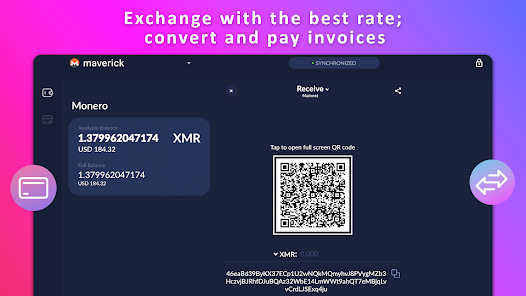
For readers who specifically want to try a well‑rounded, privacy‑oriented multi‑currency client, consider a wallet that combines Monero support with Bitcoin privacy tools, hardware integration, and constrained telemetry — one that also documents known limitations (for example, migration issues for Zcash seeds). A practical place to start research is this Monero‑focused client: monero wallet.
What to watch next: signals and evolving risks
Watch three signals. First, regulatory pressure on privacy‑preserving features: laws that mandate transaction tracing or limit shielded addresses would force design changes. Second, wider adoption of on‑chain privacy standards (e.g., PayJoin or Taproot‑based schemes) — normalization reduces cost of privacy but also shifts analysis techniques. Third, improvements in network‑level deanonymization: new ISP‑scale correlation methods or active probing could make Tor/I2P less effective unless clients adapt.
Each signal changes the trade‑offs. If privacy protocols become regulated, wallets may have to offer more opt‑in auditing pathways. If more exchanges accept privacy‑enhanced transactions, interoperability improves. If network attacks become cheaper, wallets will need stronger defaults (Tor‑only) and clearer guidance to users.
FAQ
Q: If Monero is private by default, why do I need a privacy‑focused wallet?
A: Monero’s protocol provides strong on‑chain privacy, but practical privacy depends on the wallet’s handling of keys, subaddresses, background syncing, and network connections. A wallet that keeps the private view key on the device, supports subaddresses, and offers Tor/I2P reduces operational mistakes and network metadata leaks that can undermine Monero’s protocol privacy.
Q: Can I make Bitcoin as private as Monero using wallet tools?
A: Not fully. Bitcoin’s transparency means privacy is constructed, not intrinsic. Tools like PayJoin v2, Silent Payments, coin control and batching significantly improve privacy but depend on counterparty support and careful use. Monero’s primitives (ring signatures, stealth addresses) provide stronger default protections. Treat BTC privacy as probabilistic and operationally dependent.
Q: How much does hardware wallet integration help privacy?
A: Hardware wallets greatly improve key security against device compromise, but they do not automatically solve network or on‑chain metadata leaks. If the hardware lacks support for privacy transaction types or forces the use of a particular node, you may lose privacy gains. Use hardware wallets that explicitly support the privacy features you need.
Q: Are built‑in swaps safe for privacy?
A: Built‑in swaps increase convenience but can introduce linkability if the routing parties log activity or perform KYC. Decentralized routing systems that avoid centralized intermediaries reduce this risk, but they are not a panacea; always consider the counterparty and routing transparency when swapping between private and public chains.
